

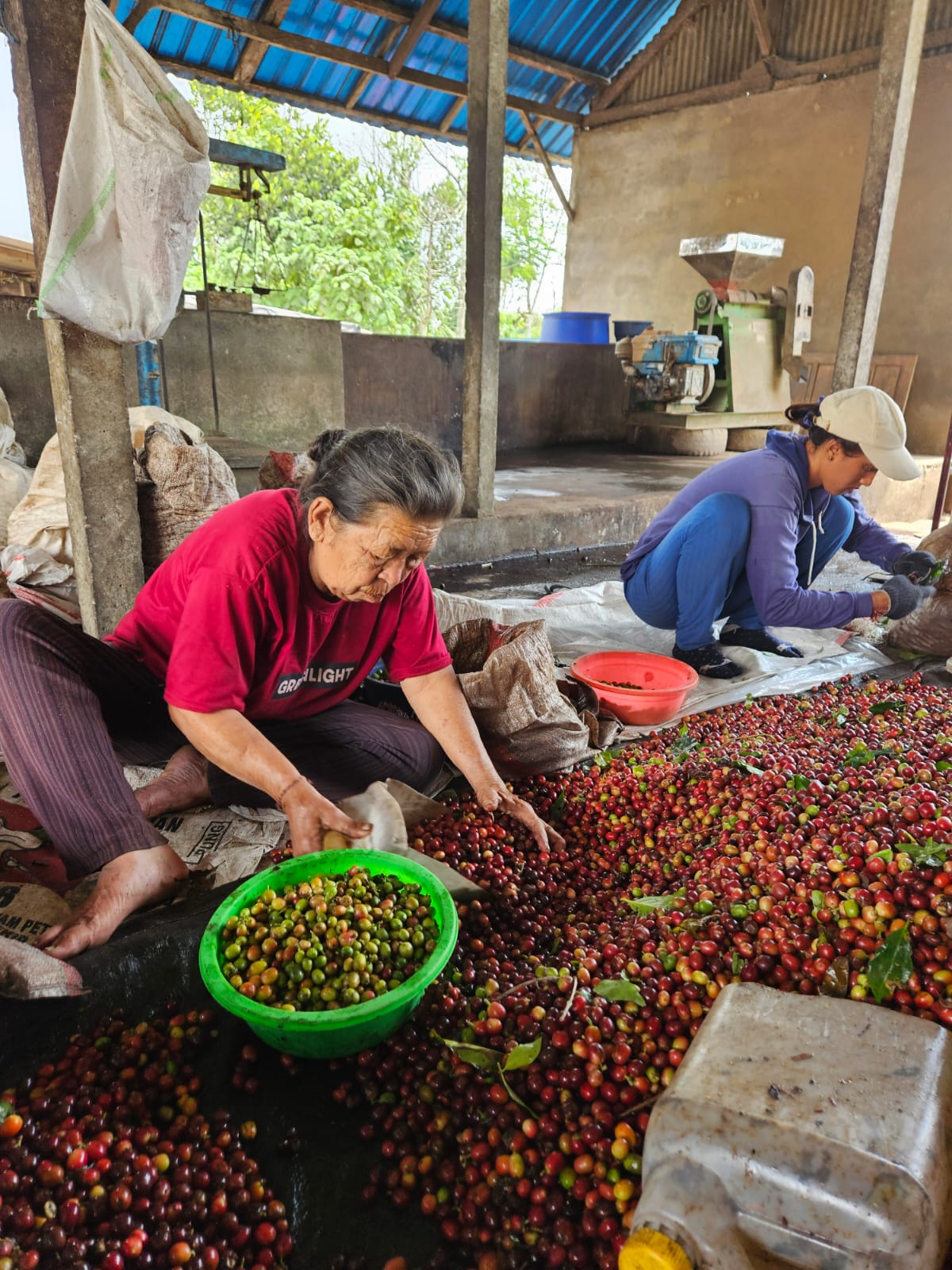
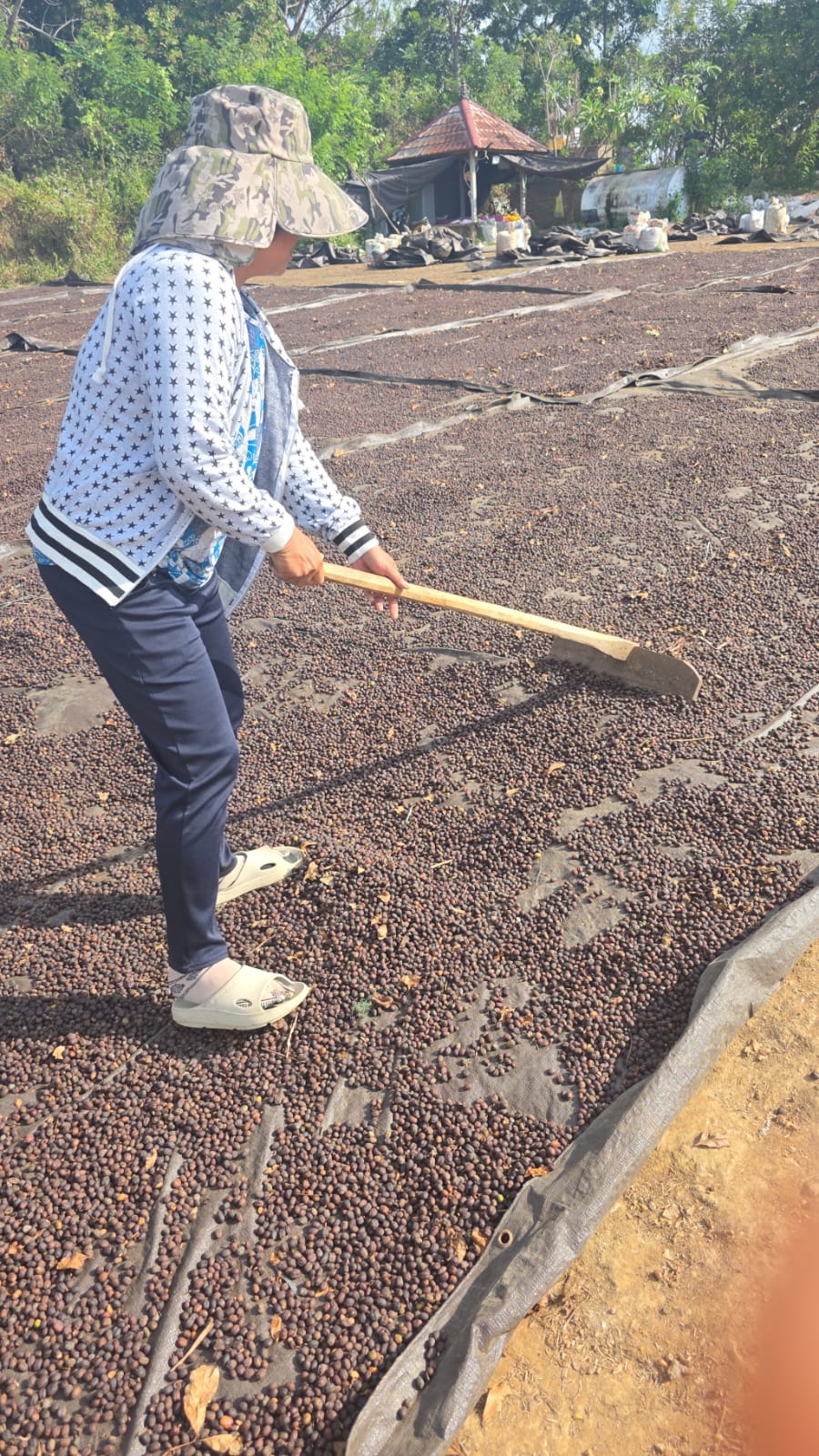
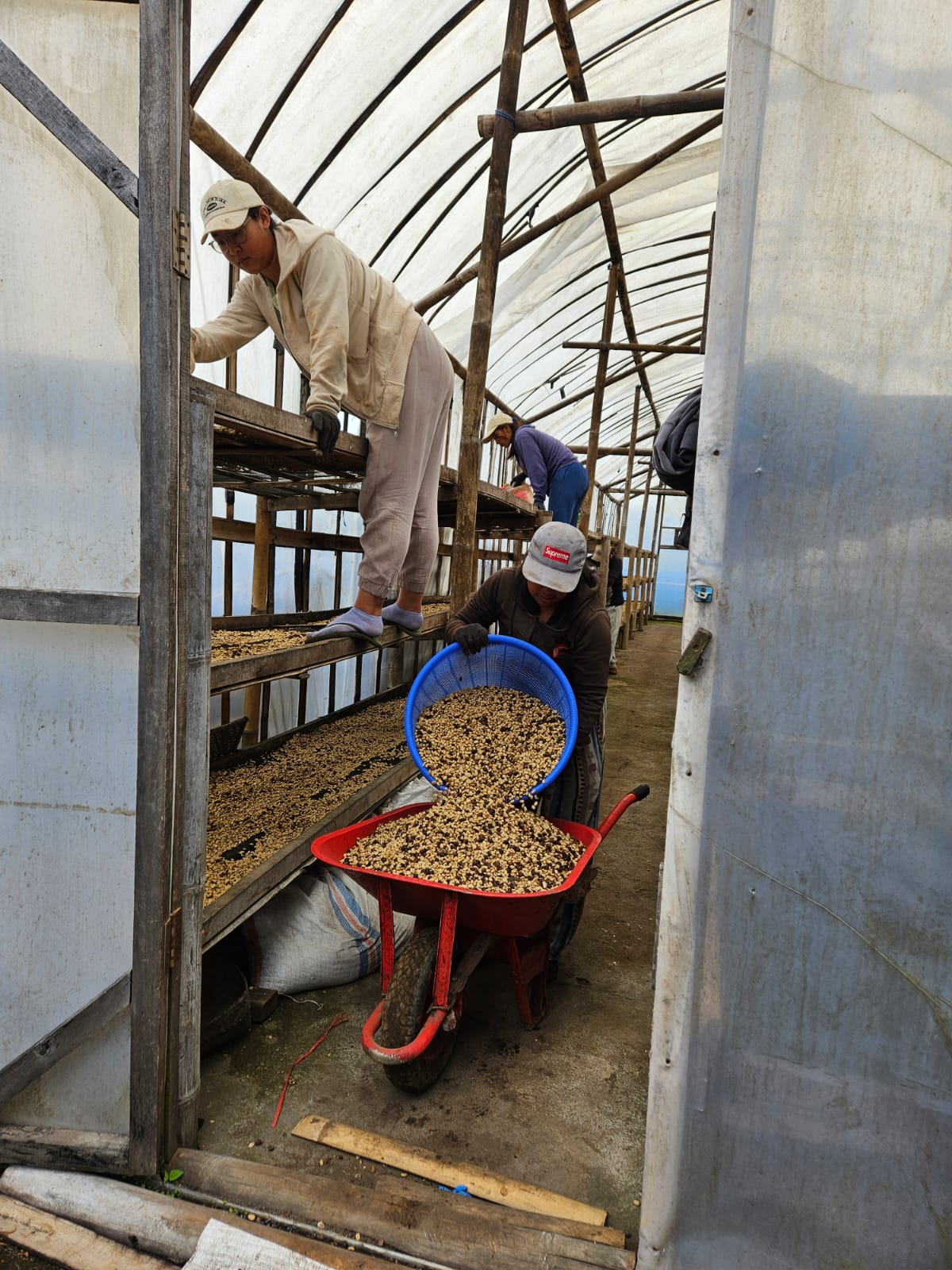
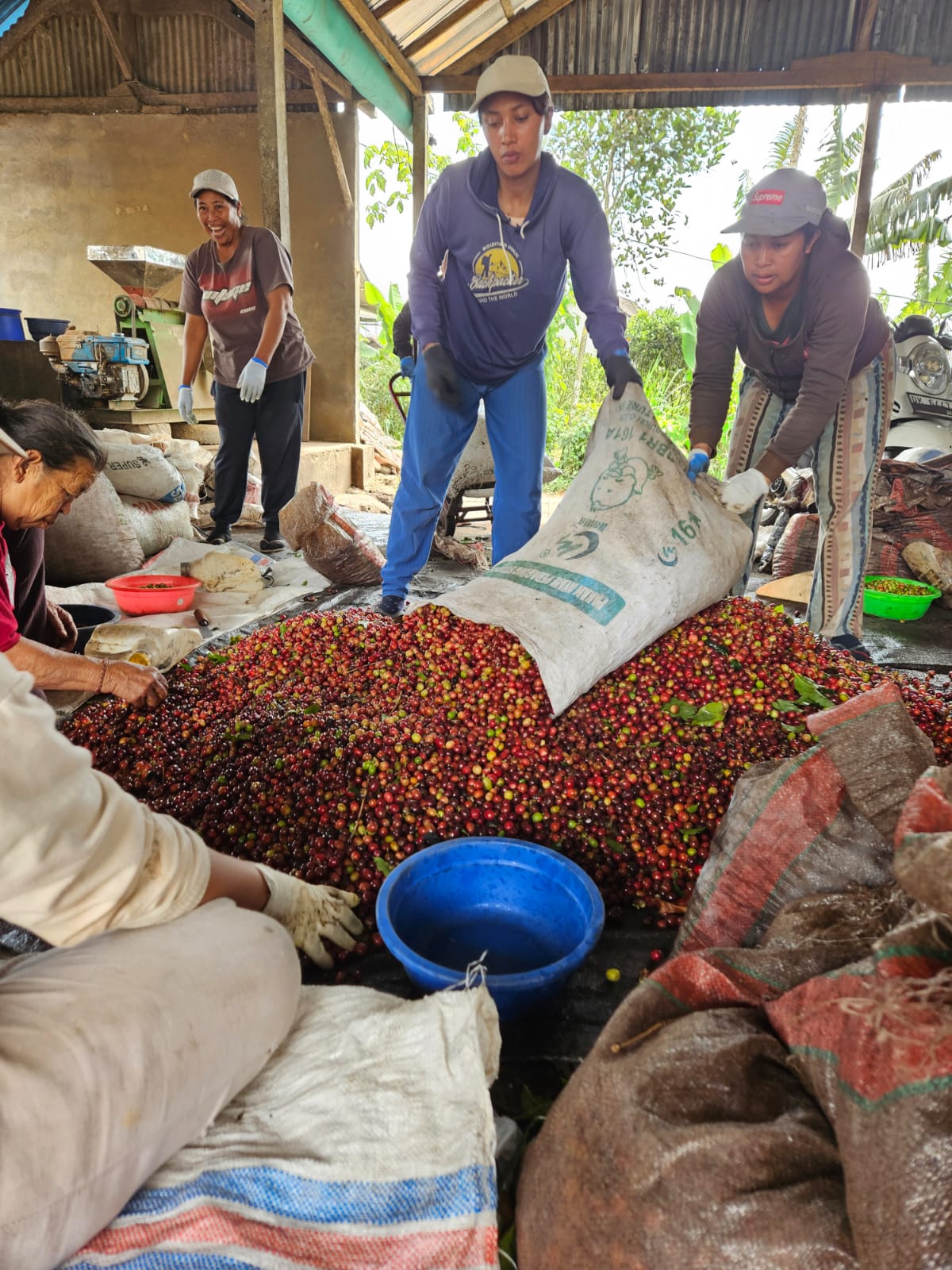
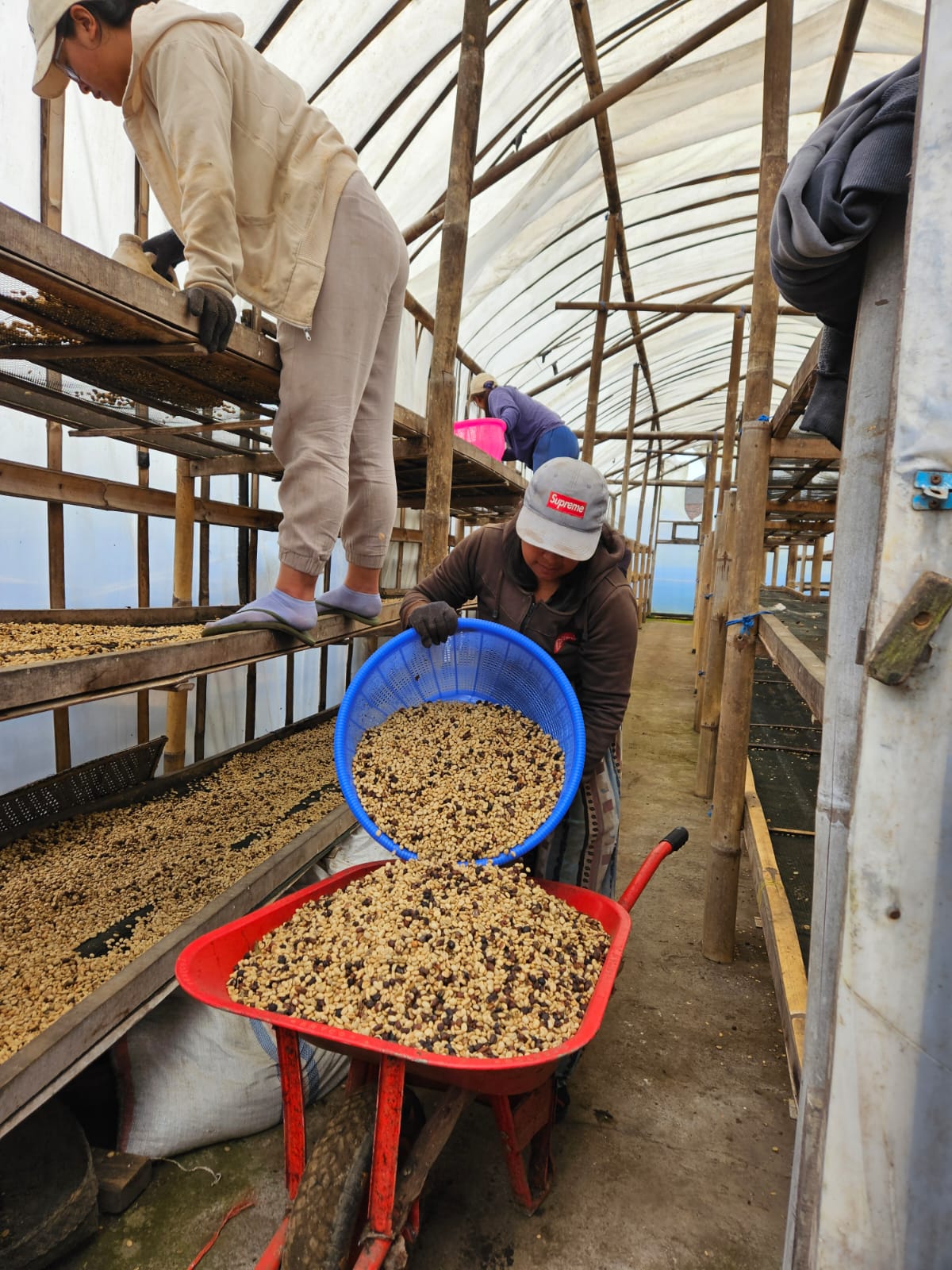
Balinese coffee-growing culture is deeply rooted in tradition, community, and generations of knowledge. Farmers often use organic and shade-grown practices, while harvesting is commonly a communal activity that strengthens local farming communities.
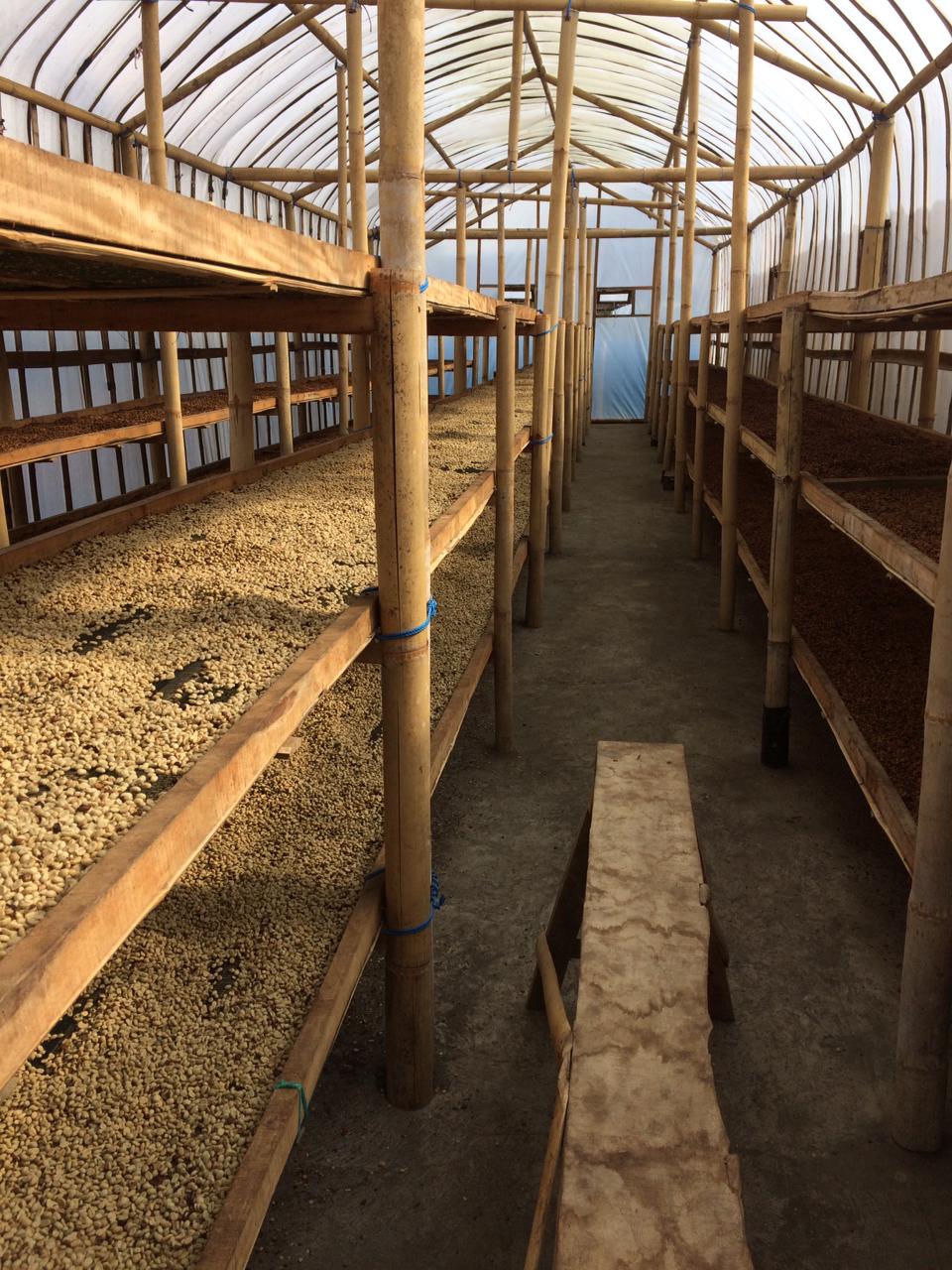
After harvesting, around 95% of the red cherries are depulped and the wet parchment is separated in water tanks. It undergoes a first 24-hour fermentation submerged in water, followed by washing and a second 12-hour fermentation in plastic drums. The parchment is then slowly sun-dried for 5–6 days on drying beds before continuing on the patio for another 14 days. Drying takes place in the highlands of Kintamani, where temperatures range from 15–26°C and humidity is lower. This distinctive fermentation and slow-drying process contributes to the coffee’s unique character.